Most years begin with predictions. This one begins with confirmation.
For nearly a decade, some industry observers have been warning ERISA fiduciary risk in health plans was building quietly, unevenly, and largely unnoticed. Not because employers did not care. But because the enforcement mechanisms that reshaped retirement plans had not yet arrived in healthcare.
Something changed on December 23.
On that day, Schlichter Bogard, the law firm that fundamentally rewired retirement plan oversight in America, filed its first healthcare ERISA cases. And for the first time, the lawsuits did not stop with plan sponsors.
They named the big benefit consulting firms directly.
That detail matters more than most people realize.
This is not a headline. It is a signal.
Healthcare Just Entered Its 401(k) Moment
Why This Feels Familiar
To anyone who lived through 401(k) reform this story may feel unsettling. It should.
Schlichter Bogard earned its reputation by doing something very specific in the retirement plan world. It took fiduciary duties that were widely acknowledged in theory and made them unavoidable in practice.
Not through regulation. Not through guidance. Through legal precedent.
Once the courts clarified fiduciaries had an ongoing duty to monitor fees, remove imprudent options, and document their process, the industry changed. Business models changed. Compensation structures changed. Oversight stopped being optional.
Healthcare has been on that same trajectory for years.
It just lacked the trigger.
Now it has one.
A Guest Perspective Worth Reading Carefully
I want to pause here and hand the keyboard to someone who has been tracking this moment long before it arrived.
Dave Chase has spent years documenting fiduciary risk in healthcare and the structural incentives keeping it hidden. In a piece published this week, he lays out why Schlichter’s entry into healthcare is not incremental, but seismic.
Below is a short excerpt from Dave’s analysis. I strongly recommend reading it with the same seriousness you would have given early 401(k) litigation if you had known what was coming.
Guest Perspective | Dave Chase
The “401(k) Tort Terror” Just Entered Healthcare
On December 23, 2025, Schlichter Bogard LLC, the firm that revolutionized retirement plan oversight filed its first healthcare ERISA cases. The law firm with three unanimous U.S. Supreme Court victories and over $750 million in settlements, filed class actions against major employers over voluntary benefits programs.
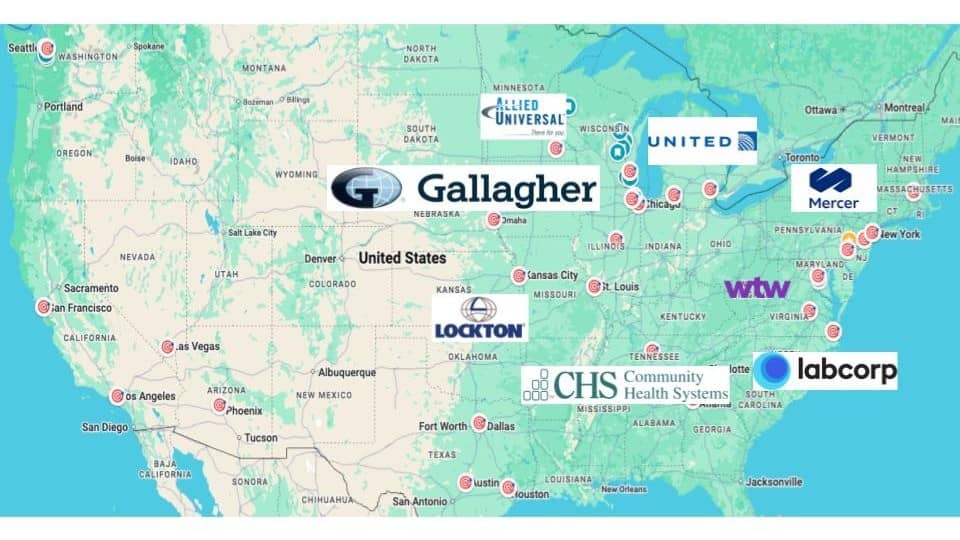
What makes these cases different is not the employers named. It is the consulting firms. Gallagher, Mercer, Lockton, and Willis Towers Watson are not witnesses or background advisors. They are named defendants facing allegations of fiduciary breach and prohibited transactions.
When commissions reach 30 to 40 percent of premiums and loss ratios fall to 25 to 35 percent, defending these arrangements as prudent becomes mathematically impossible.
Schlichter’s approach is not about quick settlements. It is about precedent. When Schlichter enters a market, the structure of that market eventually changes. Retirement plans learned this the hard way. Healthcare is next.
You can read Dave’s full article here. It’s worth your time.
Organizations Named In Schlichter Class Action
Why This Is Bigger Than One Lawsuit
It would be a mistake to read these cases as isolated or extreme.
Schlichter’s playbook is well known. Initial cases establish the theory. Later cases expand the scope. Eventually, precedent hardens expectations for everyone, including those who believed they were insulated by sophistication, scale, or market practice.
What is different this time is the explicit inclusion of benefit consultants.
Doing so collapses a long-standing assumption in healthcare. The idea advisors merely advise, while fiduciary responsibility sits elsewhere, is now being tested directly.
The risk map for employers just changed.
What This Means for the Year Ahead
Here is the most important point for plan sponsors, boards, and executives.
This moment does not require panic. It requires preparation.
A recent study showed 61 percent of employers are already thinking about making a change in their health benefits strategy. Most never do. Not because they lack conviction, but because they lack readiness.
The retirement plan industry learned this lesson too late. Many employers waited until litigation clarified what fiduciary duty really meant.
Healthcare employers still have a choice.
Why Readiness Matters More Than Prediction
This newsletter is not going to spend the year predicting what courts, regulators, or plaintiffs’ attorneys will do next.
Instead, it will focus on something more practical.
What does fiduciary readiness actually look like before you are forced into it?
It means:
Understanding advisor incentives.
Documenting process.
Knowing what standards to apply if you tested the market.
Being able to explain decisions to a CEO or a board without relying on trust alone.
Over the next several weeks, I will walk through those steps in a deliberate way. Not to push decisions. But to make them possible.
Because when fiduciary duty becomes enforceable, the organizations that fare best are not the ones that move fastest. They are the ones that prepared earliest.
This is the year preparation stops being optional.
What’s Next
Next week, we will start with a deceptively simple question:
If your advisor were named in a fiduciary lawsuit tomorrow, what would you wish you had done earlier?
That is where readiness begins.
And it is exactly where this year will focus.
A Note of Appreciation
Dave Chase
Dave Chase, is the co-founder of Health Rosetta and the Nautilus Health Institute, a 501(c)(3) nonprofit initiative launched with $4 million in Health Rosetta intellectual property and investment. Dave created Nautilus to establish open-source standards, model contracts, and data platforms to make fairness, accountability, and measurable outcomes the new norm in healthcare.
Don’t be a bystander. Change the status quo and reap the benefits of The Health Plan Compliance Advantage. Schedule an introductory call with us.