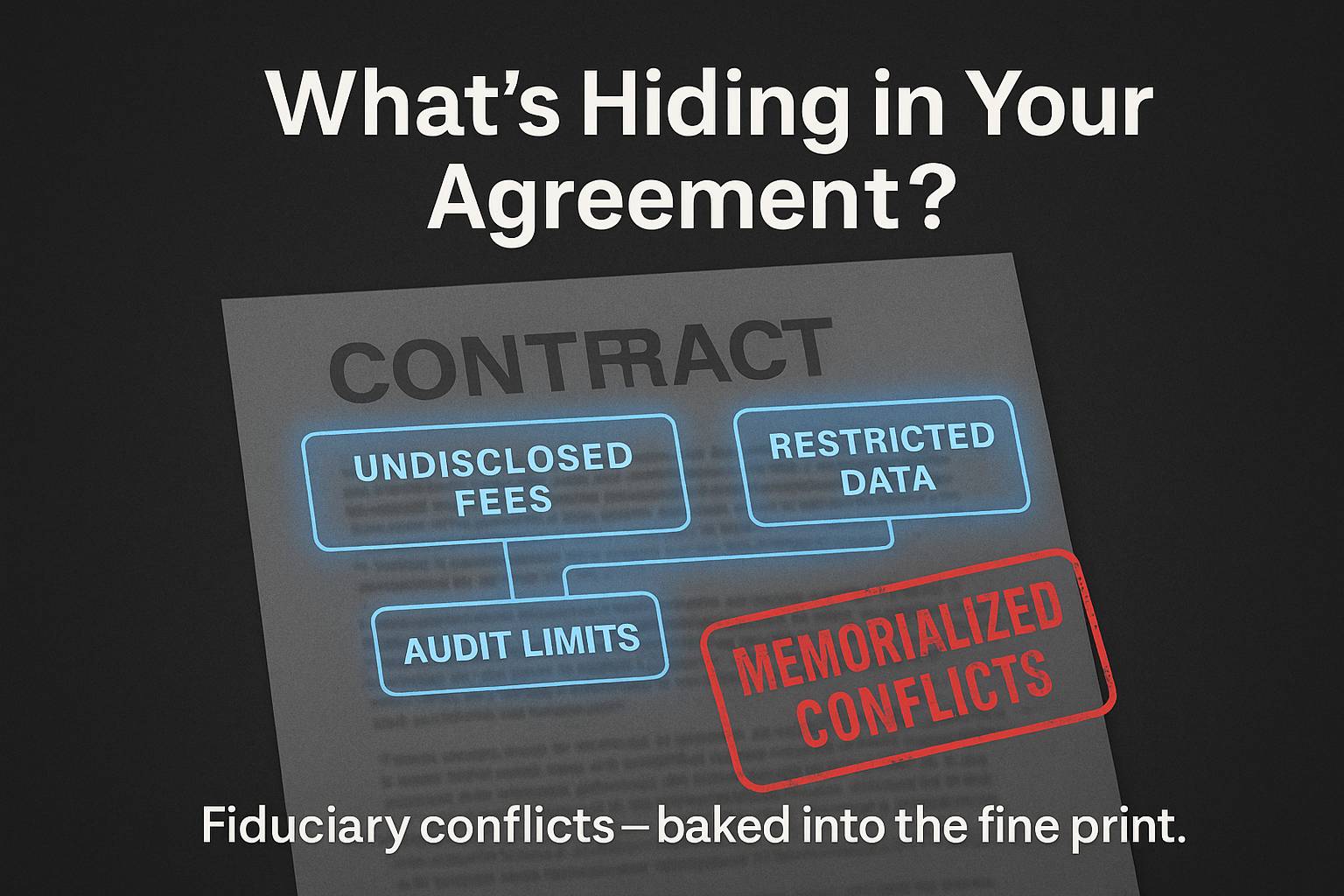
Most contracts protect the drafter. Healthcare vendor contracts go one step further: they memorialize conflicts of interest.
They don’t just fail to protect you—they lock in the very practices that drain plan assets and put fiduciaries at risk.
ERISA attorney Julie Selesnick put a fine point on it during a conversation this week:
“These contracts are written to take you to the cleaners. They build in every way the vendor can profit at your expense.”
Executive Brief
ERISA demands fiduciary duties of loyalty and prudence. Both are tested at the contracting table.
Loyalty: Are you negotiating terms putting participants first?
Prudence: Are you understanding, documenting, and mitigating risks in the fine print?
Getting it wrong doesn’t just waste money—it creates personal liability for fiduciaries. And the duty doesn’t stop when the ink dries.
As Julie emphasized:
“You can delegate responsibilities to your vendors, but you cannot delegate oversight. The duty to monitor stays with the fiduciary.”
The Boardroom Problem
Here’s the trap: Health plan vendor contracts are opaque, one-sided, and drafted by armies of lawyers who know where every escape hatch is hidden.
Executives sign them, trusting advisors and vendors, then assume the problem is “handled.”
But fiduciary duty doesn’t work that way. It requires continuous vigilance—especially when the other side profits from your blind spots.
The Case Study: When Oversight Fails
Class actions are showing us what happens when boards and fiduciaries don’t connect the dots between procurement and oversight.
Johnson & Johnson – Sued over excessive drug costs tied to opaque PBM arrangements.
JPMorgan Chase – Facing claims it failed to monitor vendor practices that inflated participant expenses.
Wells Fargo – Allegations of imprudent pharmacy benefit management oversight landing squarely on the fiduciaries.
The pattern is clear: poor contracts + limited oversight = litigation risk.
Julie has a warning for health plan fiduciaries:
“The lawyers are already standing by. If you don’t monitor, someone else will—and it’ll be in court.”
Action Items for Fiduciaries
So what do you do next? Here are five steps every prudent fiduciary should consider:
Inventory Existing Contracts – Identify every clause that creates conflicts or restricts your rights.
Benchmark Against Fiduciary Standards – Use independent expertise to test whether your terms align with ERISA loyalty and prudence duties.
Demand Transparency – Insist on audit rights, data rights, and full disclosure of compensation and other revenue.
Strengthen Oversight – Create a fiduciary committee structure with documented monitoring of vendor practices.
Document Every Decision – Create an evidence trail showing you acted in the sole interest of participants.
The Wrap-Up
Fiduciary risk doesn’t come from “bad luck”—it comes from bad contracts and weak oversight.
As a final takeaway from our conversation, Julie succinctly summed it up:
“The contract is where it starts, but the duty to monitor is where much of the risk lives. That’s what courts will look at.”
Bottom line: The time to fix this risk is before you sign.
Julie Selesnick
Thanks to Julie Selesnick for sharing her wisdom. Julie is the founder and principal attorney at Health Plan Legal Counsel PLLC. HPLC is focused on providing legal and consulting services to health plans, vendors to group health plans, and other stakeholders in the ERISA and non-Federal governmental employer sponsored and Taft Hartley health plan space.
Your Opportunity To Go First
Every lawsuit—from J&J to JPMorgan to Wells Fargo—tells the same story: lax compliance, poor procurement, and limited oversight.
The Nautilus PBM Field Guide and Configurator are designed to break the cycle. They give fiduciaries and advisors the structure, language, and tools to run a process that’s fast, defensible, and conflict-free.
Let’s connect at RosettaFest for a conversation and a demo. Not going to RosettaFest? Let’s schedule a discussion and brief demo in early September.
📩 Reply to this email or message me on LinkedIn to secure an early spot.
The PBM Field Guide Is Coming
The tools to operationalize PBM reform are on the way.
RosettaFest 2025
This summer, Nautilus is launching the PBM Field Guide at RosettaFest 2025 in Denver—a practical roadmap to apply the best of state reform, align with fiduciary principles, and take back control of your pharmacy benefits.
Advisers and employers will be able to:
Make confident, compliant decisions in the best interest of plan participants
Use open-source RFP language, contract terms, and transparent pricing standards
Avoid hidden fees, audit obstacles, and rebate distortions
Build oversight systems that keep vendors honest—and participants protected
Join the Brightest Minds, Leaders, and Change Makers.
Tired of the dark? Join us at RosettaFest 2025—and help build the future of pharmacy benefits. You’ll never look at PBMs the same way again.
💸 SPECIAL OFFER: Newsletter subscribers receive 10% off any Validation Institute service. Use code FIDUCIARY10 at checkout.
validationinstitute.com
📬 PAY IT FORWARD: Feel free to forward this offer to your broker, PBM, or other vendors. Don’t hesitate to tell them you will favor validated vendors as part of your modernized procurement processes. Strong compliance and better benefits begin with validation.
Don’t be a bystander. Change the status quo and reap the benefits of The Health Plan Compliance Advantage.