The Psychology of Loyalty and the Legal Risk of Doing Nothing
You’ve seen the headlines: lawsuits, subpoenas, FTC crackdowns.
PBMs, insurers, and brokers are under fire.
And yet, most employers haven’t moved.
Why not? Because breaking up is hard even when it’s your fiduciary duty.
Loyalty ≠ Protection
Too many fiduciaries confuse long-standing relationships with protection. “We like them and trust them.” But under ERISA, loyalty is not a defense. The law requires prudence, diligence, and undivided loyalty to plan participants—not to your vendors.
And the consequences of blind loyalty are real:
Board members and executives are being named in lawsuits.
Regulators are issuing steep penalties.
Employees are footing the bill through inflated costs and lost wages.
If your fiduciary process isn’t documented and defensible and your vendors aren’t transparent, your trust could become your liability.
Why It Happens Anyway
There are a lot of reasons for maintaining the status quo. Most of them are not particularly good.
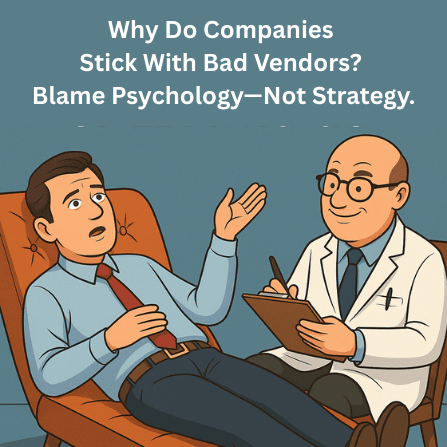
Blame Psychology
Even smart, well-meaning fiduciaries fall into these 10 traps—we call them the Vendor Loyalty Vices:
🎟️ Perkaholics: Gifts like box seat tickets feel harmless—but they buy silence and expose you to liability.
💸 Rebate Dopamine: That “savings” check is just your overpayment… minus a 9-month delay.
🪞 Stockholm Syndrome: You trust them because they’ve been around. That’s not a fiduciary defense.
🚫 Lawsuit Denial: Litigation feels remote—until you’re served. Prevention is cheaper than defense.
🌀 Complexity Complacency: Confusing contracts lull you into inaction. Benchmarking breaks the spell.
😬 FOMU (Fear of Messing Up): Change feels risky. But inaction is riskier—especially under ERISA.
📦 Outsourced Oversight: Brokers may be helpful—but they’re not conflict-free. Oversight is your job.
🔕 Comfortably Quiet: No noise? No news? Or no one checking? Silence doesn’t prove value.
🎭 Relationship Theater: They’re charming. Helpful. Responsive. Still a sales rep with an agenda.
🧊 Status Quo Inertia: Uncertainty freezes action. But doing nothing is its own legal risk.
Any of the these vices got you stuck with bad vendors? Your plan’s not fine. It’s quietly screaming into a pillow.
How to Act Like a Fiduciary
You don’t need to wait for a lawsuit to lead. Here’s how fiduciaries can disrupt the status quo—and fulfill their duty:
🔨 Start with a Board Directive: Clarify in writing that fiduciary duty includes evaluating long-standing vendor relationships.
📋 Conduct a Loyalty Audit: Document every vendor, the last RFP, and whether they’re delivering or just familiar.
⚖️ Compare Against Industry Standards: Benchmarking reveals whether you’re behind the curve—or just stuck.
🔎 Demand Compensation Disclosures: ERISA requires it. If you haven’t seen them, request them in writing.
☑️ Use Third-Party Validation: Eliminate guesswork. Independent reviews with performance guarantees remove fear of change.
🤝 Engage Conflict-Free Advisors: If the only praise comes from the vendor, it’s time for an outside opinion.
Employer Case Study
“We Didn’t Realize What We Were Missing”
A regional employer with 3,000 lives used the same broker and PBM for over a decade.
No RFPs in 10+ years
No compensation disclosure
No rebate transparency
No claims audit rights
After seeing lawsuits led by the state Attorney General tied to PBM spread pricing, the CFO authorized a review:
Identified $1.2M in annual pharmacy overspend
Discovered undisclosed broker incentives
Transitioned to a transparent PBM with validated outcomes
They now hold quarterly fiduciary committee meetings and have reduced per-employee pharmacy costs by 22%. What changed their mind?
✅ A legal wakeup call
✅ A transparent offer
✅ An executive willing to lead
“We didn’t realize how much money we were leaving on the table,” said the CFO.
Compliance improved. Costs dropped. And no more blind loyalty.
Key Executive Takeaways
Vendor loyalty is not a fiduciary strategy.
Longtime vendors can hide costs and conflicts.
Inaction is your biggest compliance risk.
Breaking free requires leadership and action.
Independent guidance exists—and it pays for itself.
Want Help? You don’t have to rip and replace overnight—but you do have to act. Start with a no-risk vendor evaluation.
📩 Schedule a consultation call today.
💸 SPECIAL OFFER: Newsletter subscribers receive 10% off any Validation Institute service. Use code FIDUCIARY10 at checkout.
validationinstitute.com
📬 PAY IT FORWARD: Feel free to forward this offer to your broker, PBM, or other vendors. Don’t hesitate to tell them you will favor validated vendors as part of your modernized procurement processes. Strong compliance and better benefits begin with validation.
Don’t be a bystander. Change the status quo and reap the benefits of The Health Plan Compliance Advantage.