Executive Brief
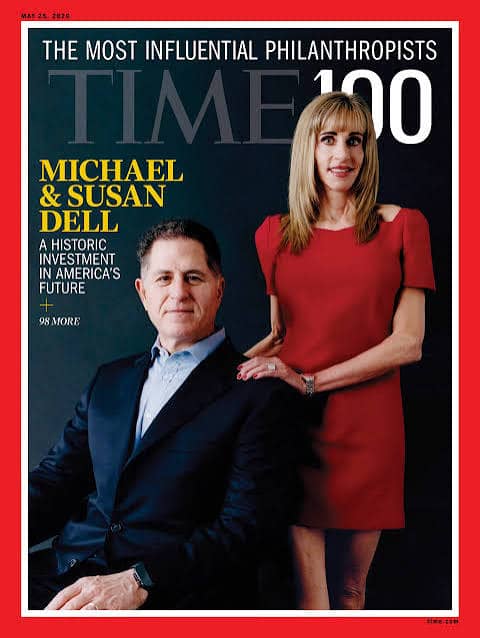
Michael and Susan Dell just pledged $6.25 billion to fund investment accounts for 25 million American children. Each child receives about $250, a seed that will grow over decades. It is arguably the largest single gift Americans have ever received from two of their fellow citizens.
Their generosity deserves celebration. It’s a historic investment in America’s future.
Here’s what every employer in the country should understand: you can do the same thing for the children of your employees. Not through philanthropy. Through fiduciary duty.
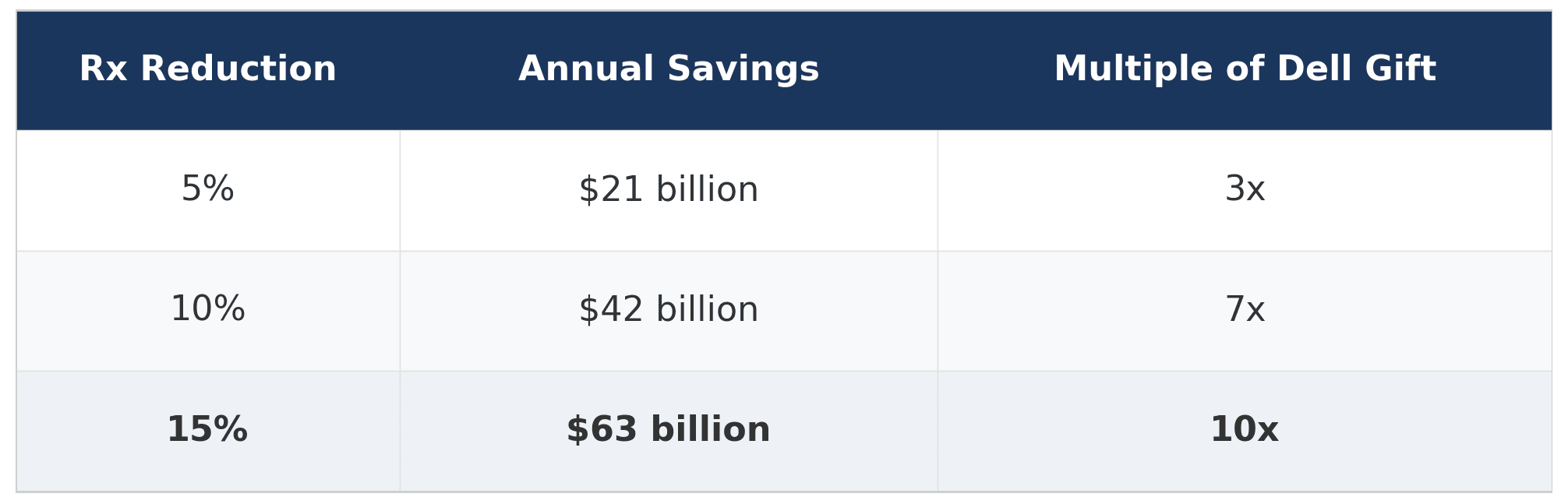
Employer health plans spend roughly $420 billion a year on prescription drugs. A 15% reduction, achievable through transparent contracts and real governance, would generate $63 billion annually.
That’s ten times the Dell gift. Every year. Recurring.
Pharmacy is the place to start. The lessons transfer to medical spending.
Medical spending represents another $980 billion and responds to the same governance discipline: fiduciary oversight, transparency, and accountability. Apply 15% there and you add $147 billion.
Combined: $210 billion annually. 33 times the Dell gift.
The Dells did it through their generosity. Fiduciaries can do it through their duty.
The Math Behind the Impact
Fiduciary duty can seem abstract. But the comparison to billionaire size philanthropy isn’t rhetorical. The numbers are real.
The Dell Pledge:
• $6.25 billion total
• 25 million children
• ~$250 per child (one-time)
Employer Health Spending:
• ~$1.4 trillion annually
• Pharmacy: ~$420 billion (30%)
• Medical: ~$980 billion (70%)
• 154 million covered lives
• ~35-40 million children in those families
The Pharmacy Opportunity:
These aren’t aspirational targets. A 15% reduction is what happens when employers demand pass-through pricing, exercise data and audit rights, and hold vendors accountable for fiduciary-aligned contract terms.
The Medical Opportunity:
The same governance discipline applies to the other $980 billion. DPC, direct contracts, centers of excellence: fiduciary oversight, transparency, accountability. A 15% reduction adds $147 billion.
Combined: $210 billion annually. 33 times the Dell gift.
Where the Savings Land
Dell’s $250 goes into a child’s investment account. Fiduciary savings flow differently, but land in the same place.
Lower premiums. When employer health costs drop, employees pay less out of every paycheck. For a family of four, a 15% Rx reduction translates to roughly $600-800 per year in lower premium contributions.
Higher wages. Health costs that don’t rise are dollars available for compensation. The connection isn’t direct, but it’s real: employers who control benefit costs have more flexibility to invest in their people.
Less financial stress. Medical debt is the leading cause of bankruptcy in America. Lower costs mean fewer families forced to choose between filling a prescription and paying rent.
For working families with children, all of this compounds. Every dollar not lost to PBM spread pricing or inflated formulary placement is a dollar available for groceries, childcare, college savings, or just breathing room.
The mechanism is different from a billionaire’s gift. But the impact lands in the same place: in the futures of working families and their children.
The Framework That Delivers It
The question is how. How does an employer, a benefits committee, a general counsel actually produce these results?
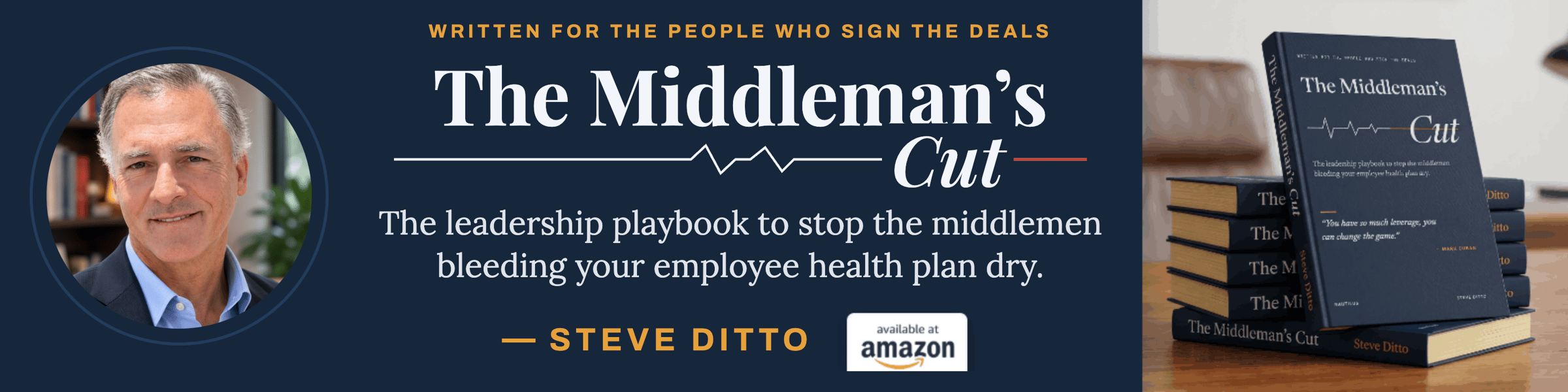
Read The Middleman’s Cut. Adopt the framework. Embrace the role.
The most gratifying part of writing The Middleman’s Cut has been the feedback from executives, fiduciaries, lawyers, and even PBM CEOs who’ve read it. The response has been nearly universal: it changed their perspective on what fiduciary duty actually means.
It’s not a burden or a compliance exercise. It’s an opportunity. A roadmap for delivering better benefits at lower cost for employees and their families.
The framework exists. The leverage is built into the role. The resources are available.
The only question is whether you act.
What to Do First Thing Monday
- Read the book. If you haven’t read The Middleman’s Cut, start there. Download the Foreword at dittoandassociates.com/book for free.
- Share this newsletter with your benefits committee. The Dell comparison makes the stakes concrete. Forward it to anyone who thinks fiduciary governance is abstract.
- Run the numbers for your plan. What’s your annual pharmacy spend? What would 10% savings look like? 15%? Put a dollar figure on the opportunity.
- Ask one fiduciary question this week. In your next PBM discussion, ask: “What would a prudent fiduciary do here?” Watch how the conversation shifts.
In Appreciation
Michael and Susan Dell showed what’s possible when wealth meets intention. They’re investing in the futures of 25 million children. That’s extraordinary.
Fiduciaries have the same opportunity, without needing the wealth. The leverage is built into the role. The impact is available to anyone who takes the duty seriously.
To whom much is given, much is expected. Fiduciaries have been given responsibility for $1.4 trillion in annual health spending covering 154 million Americans and their families.
Here’s to clearer thinking, stronger plans, and better outcomes for the people who rely on us.
All the best,
P.S. The Dells gave $250 per child. A fiduciary who reduces health costs by 15% generates roughly $1,360 per covered person, every year.
The math is real. The opportunity is yours.
────────────────────────────────────────
Keep Reading. Keep Asking Better Questions.
📬 THE NEWSLETTER
Timely insights every Monday. Contracts. PBMs. The decisions that shape outcomes.
SUBSCRIBE
📖 THE BOOK
The leadership playbook for understanding where the money goes and what to do about it.
EXPLORE THE BOOK
🔍 CONTRACT X-RAY
See how your PBM contract measures up. Where it’s strong. Where it’s weak. What needs to change.
SCORE YOURS
📞 THE CONVERSATION
PBM contract, fiduciary question, or employer-health-plan issue you want to work through?
LET’S TALK
See the money. Know the terms. Use your leverage.
────────────────────────────────────────