Executive Brief
October 5 was a good day for transparency. Interagency coordination is real and visible. Four federal agencies announced coordinated rules tightening health plan disclosure requirements. The FTC sent warning letters to 24 hospital systems. DOL’s Dan Aronowitz reminded plan sponsors that “to whom much is given, much will be expected.”
October 5 was about transparency. It complements another accountability mechanism that has been building in the courts since March.
In Stern v. JPMorgan Chase, a federal judge dismissed the fiduciary breach claims. That’s what happened in the earlier PBM lawsuits too. But this time, something else survived: the prohibited transaction claims. That’s the legal theory with real teeth. Once a plaintiff proves the transaction occurred, the burden shifts to the defendant to prove the compensation was reasonable.
The disclosure requirements you’re scrambling to satisfy under CAA 2026? They’re building the evidentiary record for exactly these claims.
Washington’s Progress Is Real
Credit where it’s due. The October 5 announcements represent genuine progress on healthcare price transparency.
What HHS, DOL, and Treasury finalized:
- Machine-readable files restructured by provider network, reducing duplication
- Quarterly updates instead of monthly, which the Departments estimate saves plans $174.5 million annually
- CEO attestation requirements on file accuracy
- A new Taxonomy File and Utilization File adding context to rate data
- A plain-text pointer file and homepage “Price Transparency” link requirement
What DOL’s Dan Aronowitz signaled:
Assistant Secretary Aronowitz framed the transparency initiative around fiduciary accountability. He quoted from Chris Deacon’s book on ERISA litigation.
He also reminded plan sponsors of a principle that should concentrate minds: “To whom much is given, much will be expected.”
That’s not regulatory language. It’s a statement about responsibility. Plan sponsors have been given transparency tools. The expectation is they’ll use them.
What the FTC added:
Warning letters to 24 hospital systems. The letters don’t allege violations. They remind recipients that CMS compliance does not create a safe harbor from FTC Act liability. Pricing information should be timely, reflect expected actual costs, and be visible rather than buried.
The interagency coordination is the bigger story. HHS, DOL, Treasury, and FTC are speaking from the same script. That’s new. That matters.
The Parallel Track in the Courts
Most plan sponsors believe the PBM litigation threat subsided. They’re pointing to the wrong cases.
Lewandowski v. Johnson & Johnson was dismissed. Navarro v. Wells Fargo was dismissed. Both failed on standing. Courts found that participant harm from premium increases was too speculative to support the lawsuit.
That’s where the analysis usually stops. It shouldn’t.
Stern v. JPMorgan Chase took a different path. The court found standing based on participants’ out-of-pocket overpayments for prescription drugs. That’s concrete harm, not speculative premium theory.
And with standing established, the court reaches the merits.
The fiduciary breach claims were dismissed. The court held that PBM selection, formulary design, and pricing models are plan design decisions. Settlor functions. Not fiduciary acts.
But the prohibited transaction claims survived.
Prohibited Transactions: The Theory With Teeth
Here’s what most plan sponsors miss about prohibited transactions.
Under ERISA Section 406, certain transactions between a plan and a “party in interest” are prohibited. A PBM is a party in interest. Every payment to that PBM is a transaction. If the compensation is unreasonable, the exemption under Section 408 doesn’t apply. What’s left is a prohibited transaction.
The burden structure is the key.
A plaintiff doesn’t have to prove unreasonable compensation to survive dismissal. They only have to allege that a transaction occurred between the plan and a party in interest. That’s it.
Once that’s established, the burden shifts. The defendant has to prove the compensation was reasonable. That’s an affirmative defense. And it requires the defendant to demonstrate that every dollar paid was justified.
This is different from fiduciary breach claims, where plaintiffs carry the full burden. With prohibited transactions, the plaintiff clears the standing bar by showing out-of-pocket harm, alleges the transaction, and waits for the defendant to explain itself.
The remedies go beyond restitution.
Under Harris Trust v. Salomon Smith Barney, plans can sue non-fiduciary parties in interest who knowingly participate in prohibited transactions. The remedy isn’t just giving back what was taken. Courts can order disgorgement: the wrongdoer surrenders the profits they made from the plan’s assets. If a PBM retained $2 million in unreasonable spread and put that money to work, the plan can recover the $2 million and what the PBM earned from it.
What This Actually Costs
This isn’t abstract compliance risk. Here’s what happens when a prohibited transaction claim proceeds.
The work: Document production covering every email, contract, and internal memo about vendor selection. Depositions of executives, benefits staff, and committee members. Expert witnesses on both sides. Two to four years of litigation before trial or settlement.
The money: Defense costs run $1-5 million even if you win. Comparable retirement plan excessive-fee cases have settled for $10-100 million depending on plan size. The calculation is straightforward: overpayment per claim, times number of claims, times years in the class period. A large self-insured employer with specialty drug exposure could face eight-figure liability. Plaintiffs’ attorneys take 25-33% of any recovery.
The exposure: D&O insurance premiums increase 20-50% after a claim. Individual fiduciaries can be removed by court order. DOL may open its own investigation based on the litigation. And discovery makes internal decision-making public record.
The fiduciary doesn’t go to jail. In most cases, they don’t write a personal check. D&O insurance and company indemnification cover the defense. But their career takes a hit. Their company pays millions. And the whole episode becomes a case study in what not to do.
Depositions. Headlines. Eight-figure settlements. That’s what “prohibited transaction” means in practice.
The Through-Line From Last Week
Issue 97 covered the fifteen vendor categories now subject to CAA 2026 compensation disclosure requirements. The disclosure obligation extends beyond your advisor. It reaches your PBM, your TPA, your stop-loss carrier, your wellness vendor, your transparency tool. Each owes you a written disclosure covering direct and indirect compensation.
Here’s how these two issues connect:
CAA 2026 disclosure requirements create the evidentiary record. When a vendor discloses indirect compensation from manufacturers, from spread arrangements, from rebate retention, that disclosure becomes a document. A document that can be introduced in litigation. A document that either supports or undermines a claim that the compensation was reasonable.
The courts are watching. The Stern ruling cited the Cunningham v. Cornell standard: plaintiffs need only plausibly allege that a fiduciary engaged in a transaction the statute prohibits. The elements are straightforward. A plan engaged in a transaction. The fiduciary knew or should have known the transaction involved furnishing services. The transaction was between the plan and a party in interest.
Every PBM arrangement satisfies those elements. The question is whether the Section 408 exemption applies. And that turns on whether the compensation was reasonable.
The disclosure you’re collecting today is the evidence that answers that question tomorrow.
What the False Comfort Looked Like
When Lewandowski and Navarro were dismissed, the benefits industry exhaled. Consultants told plan sponsors the litigation wave had crested. The theory was too speculative. Plaintiffs couldn’t show harm.
That reading was incomplete.
Those cases failed on standing, not substance. The courts never reached the fiduciary duty or prohibited transaction questions. When a case fails on standing, it tells you nothing about the underlying legal theory.
Stern found standing through a different door. Out-of-pocket drug overpayments are concrete, particularized harm. That’s enough.
And once the court reached the merits, the prohibited transaction claims survived. The fiduciary claims didn’t. That’s the opposite of what most sponsors assumed. The real exposure is the transaction itself.
What to Do First Thing Monday
The posture here is proactive. Waiting for a problem to surface is not a fiduciary strategy.
- Confirm you have the disclosure. Not a fee schedule. The CAA 2026 disclosure covering indirect compensation. If you don’t have one, request it in writing today. The clock on the 90-day cure period starts when you ask.
- Evaluate whether compensation is reasonable. The Section 408 exemption requires that compensation be “not more than reasonable” for services actually rendered. That means you need to know what you’re paying for, and whether the amount is justified. Aggregate numbers don’t satisfy the requirement. Service-by-service analysis does.
- Document everything. A fiduciary who can demonstrate they collected disclosures, evaluated compensation reasonableness, and documented that analysis before renewing is in a different position than one who just signed. The documentation is the defense.
- Act on what you find. This is where most plan sponsors stop short. In no other part of business would you determine a vendor payment was unreasonable and do nothing about it. If the compensation isn’t justified, you have a decision to make: terminate the contract if your terms allow it, or rebid at the next renewal period. Documenting a problem and then renewing anyway is not a defensible position.
- Brief your legal and benefits teams on the burden shift. Most sponsors have been briefed on fiduciary duty risk. The prohibited transaction burden structure is different. Once a plaintiff clears the standing bar, the explanation burden falls on you. Make sure your teams understand what that means for the documents you’re creating today.
Tools and Resources
In Closing
Washington made real progress on October 5. Four agencies speaking with one voice on transparency. CEO attestations. Quarterly reporting. Network-level data. And a reminder from Assistant Secretary Aronowitz that with transparency comes expectation.
But transparency alone isn’t accountability. Disclosure creates information. Action creates consequences.
The Stern ruling is a signal. Prohibited transaction claims survive where fiduciary breach claims fail. The burden shifts to defendants to prove compensation was reasonable. The disclosure documents you’re collecting become the evidence in that defense.
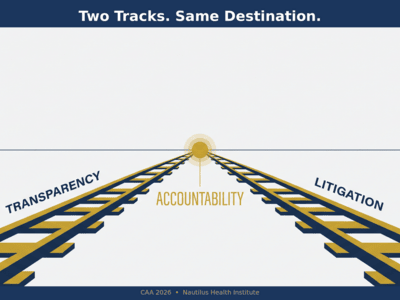
The two tracks are converging. What Washington is requiring, courts are enforcing. And fiduciaries who collect disclosures, evaluate them, and act on what they find will be in a different position than those who file the paperwork and renew.
Here’s to clearer thinking, stronger plans, and better outcomes for the people who rely on us.
All the best,
P.S. The Stern court ordered plaintiffs to file a reply to JPMorgan’s Section 408 exemption defense. That reply has been filed. We’re watching the next moves. If the exemption defense fails, the prohibited transaction claims proceed to discovery. That’s when compensation documents become exhibits.
────────────────────────────────────────
Keep Reading. Keep Asking Better Questions.
📬 THE NEWSLETTER
Timely insights every Monday. Contracts. PBMs. The decisions that shape outcomes.
SUBSCRIBE
📖 THE BOOK
The leadership playbook for understanding where the money goes and what to do about it.
EXPLORE THE BOOK
🔍 CONTRACT X-RAY
See how your PBM contract measures up. Where it’s strong. Where it’s weak. What needs to change.
SCORE YOURS
📞 THE CONVERSATION
PBM contract, fiduciary question, or employer-health-plan issue you want to work through?
LET’S TALK
See the money. Know the terms. Use your leverage.
────────────────────────────────────────