Model Contract Terms for Three Provisions That Define Fiduciary Alignment
Executive Brief
Over the past three weeks, we examined provisions that determine whether an employer can verify what their PBM is doing (audit rights), act on what they find (carve-out rights), and leave when they need to (termination rights).
The findings were stark:
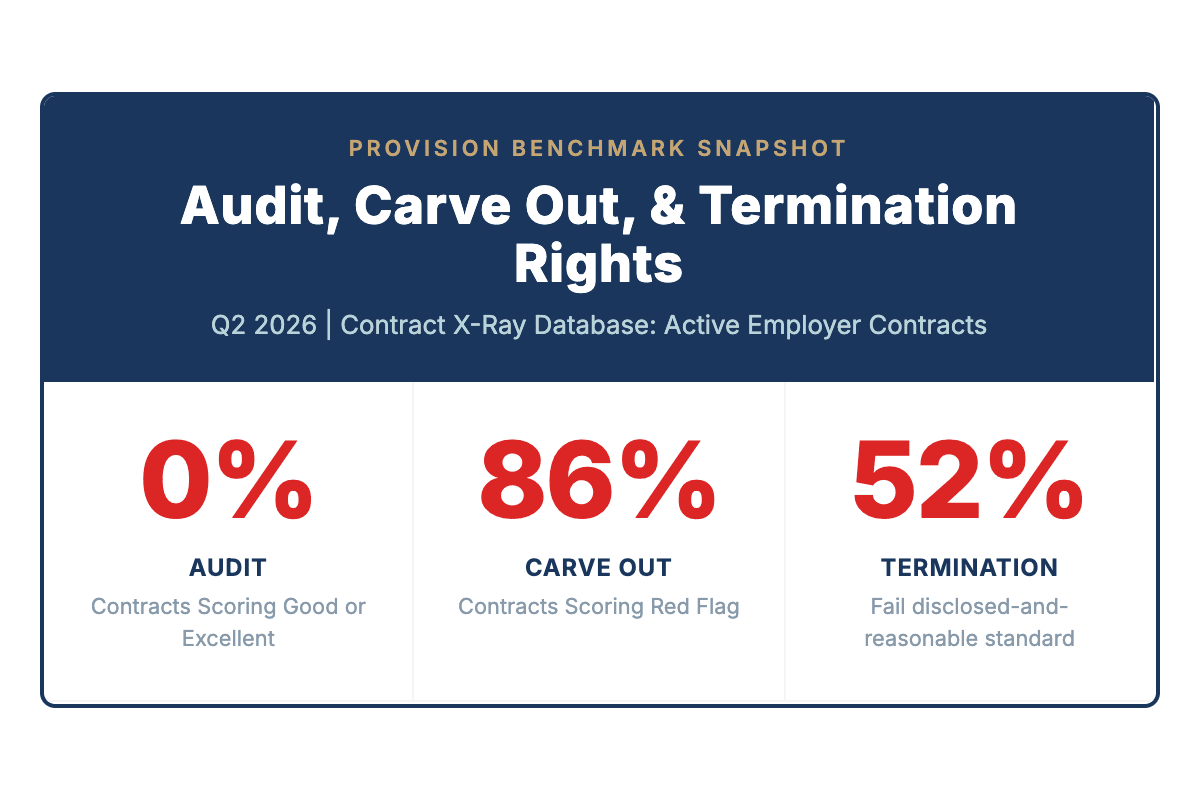
Audit rights: 0 out of 30 contracts pass. Mean score 39/100.
Carve-out rights: 86% score Red Flag. Mean score 18/100.
Exit rights: 52% fail the disclosed-and-reasonable standard.
But we also found some PBMs are already offering “CAA 2026 Ready” contracts with provisions that score Excellent as standard terms, not negotiated exceptions.
This week: the actual language. What your contract probably says. What it means. And what fiduciary-grade language requires.
Three provisions. Three tables. The standard exists.
Audit Rights: The Illusion of Oversight
What the contract likely says:
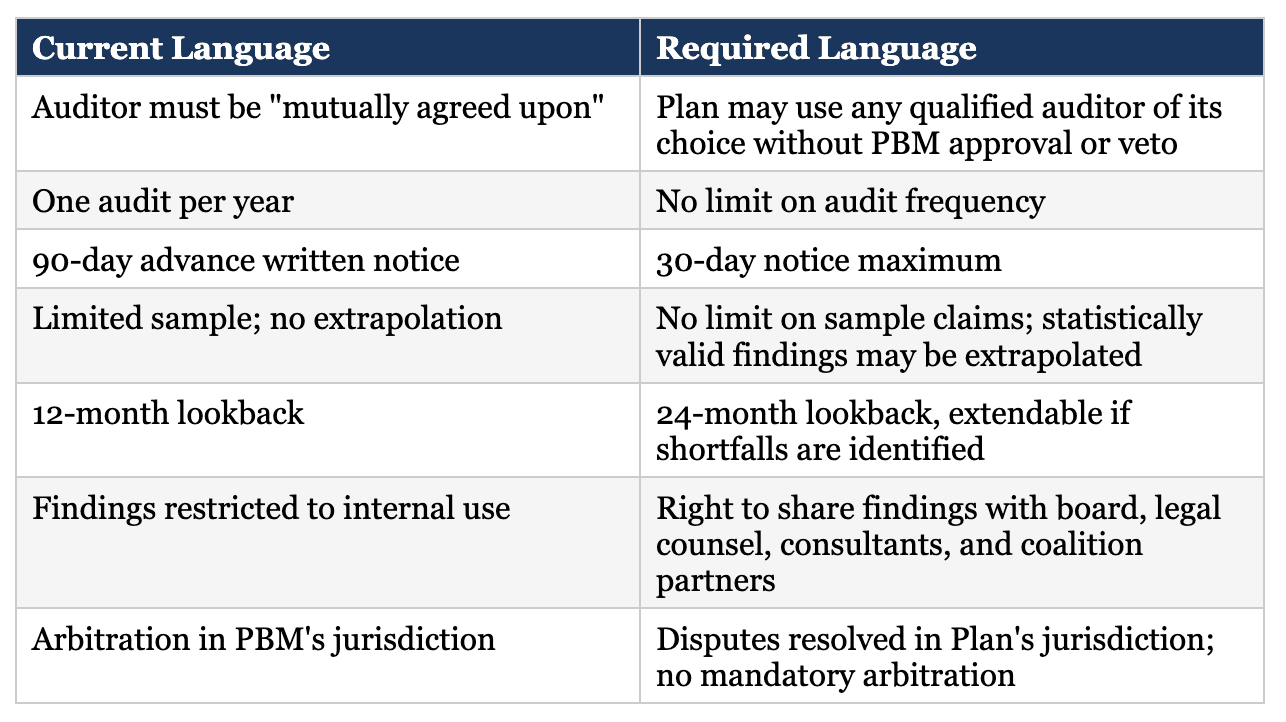
“Plan Sponsor may conduct one annual audit of PBM’s records, using an auditor mutually agreed upon by both parties, upon ninety (90) days advance written notice.”
What it means:
“Mutually agreed” gives the PBM veto power over your auditor selection. Ninety days notice gives the PBM a full quarter to prepare. One audit per year with a PBM-selected sample means systematic overcharges in the other eleven months go unexamined.
In one contract, the audit clause also required arbitration of disputed findings in the PBM’s home jurisdiction. The employer had audit rights on paper. In practice, they had no meaningful way to verify anything.
What fiduciary-grade language requires:
Current vs. Model Contract Language – Audit
2. Carve-Out Rights: The Lock Disguised as Exclusivity
What the contract likely says:
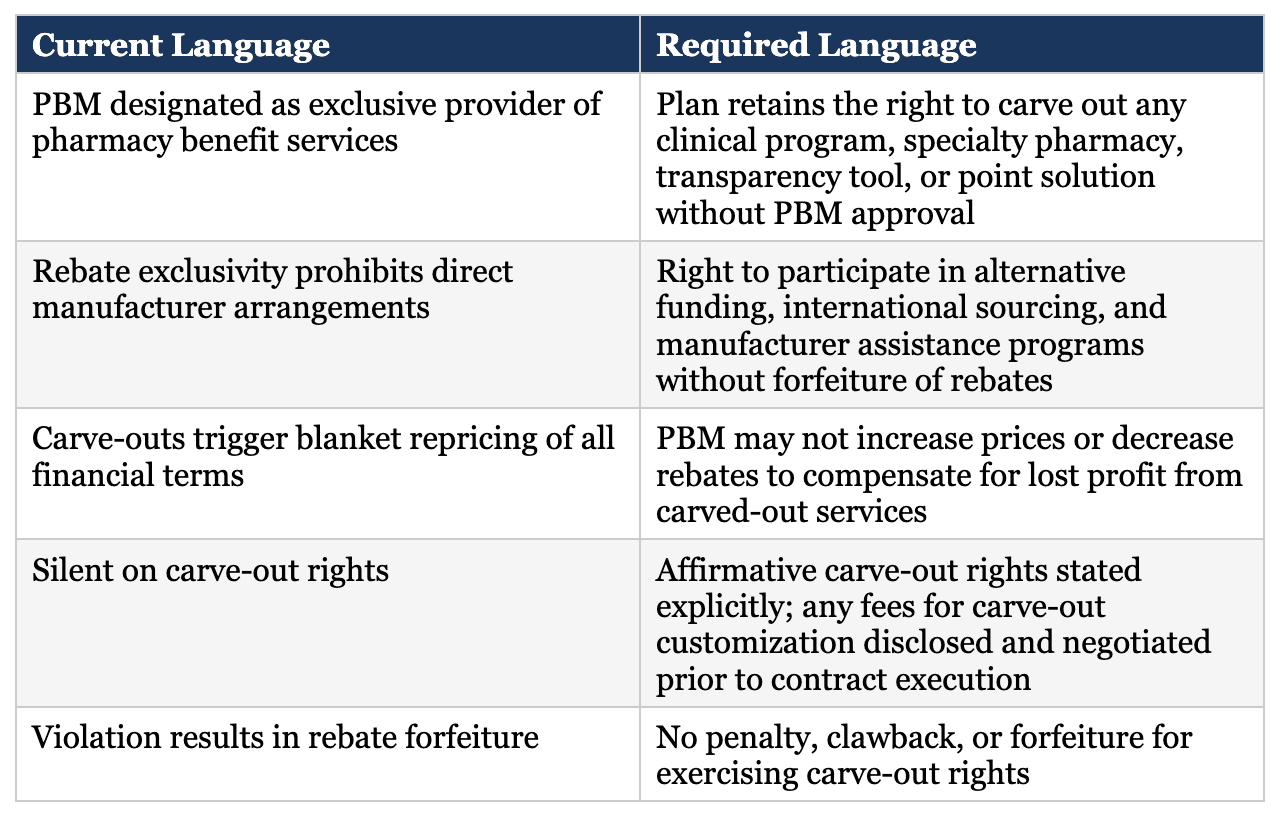
“Participating Group shall utilize PBM as the exclusive provider of pharmacy benefit services described in this Agreement. During the term of this Agreement, Client shall not contract, directly or indirectly, with a Manufacturer and/or any third-party (e.g., rebate aggregators and/or intermediaries) for rebates, discounts, or other financial incentives on Paid Claims. In the event that PBM determines Client has violated this provision, Client shall be deemed ineligible to earn Rebates, and Client shall be required to reimburse PBM for any Rebates previously earned.”
What it means:
Service exclusivity locks the front door: you can’t engage a specialty pharmacy, alternative funding program, or clinical management vendor without violating the contract.
Rebate exclusivity locks the back door: you can’t pursue manufacturer arrangements, international sourcing, or rebate aggregation independently and if you try, you forfeit rebates yo u’ve already earned.
Blanket repricing prices the side door to be unusable: the moment you exercise any vendor flexibility, every financial term in the contract is up for renegotiation. The economic cost of using outside vendors is engineered to exceed the savings.
In one contract in the database, the PBM committed in writing to recommend international sourcing and manufacturer assistance programs as part of its fiduciary functions then prohibited the employer from engaging any outside vendor to deliver them. The fiduciary commitment and the exclusivity clause sat two pages apart.
What fiduciary-grade language requires:
Current vs. Model Contract Language – Carve Out Rights
3. Termination: The Contract You Can’t Leave
What the contract likely says:
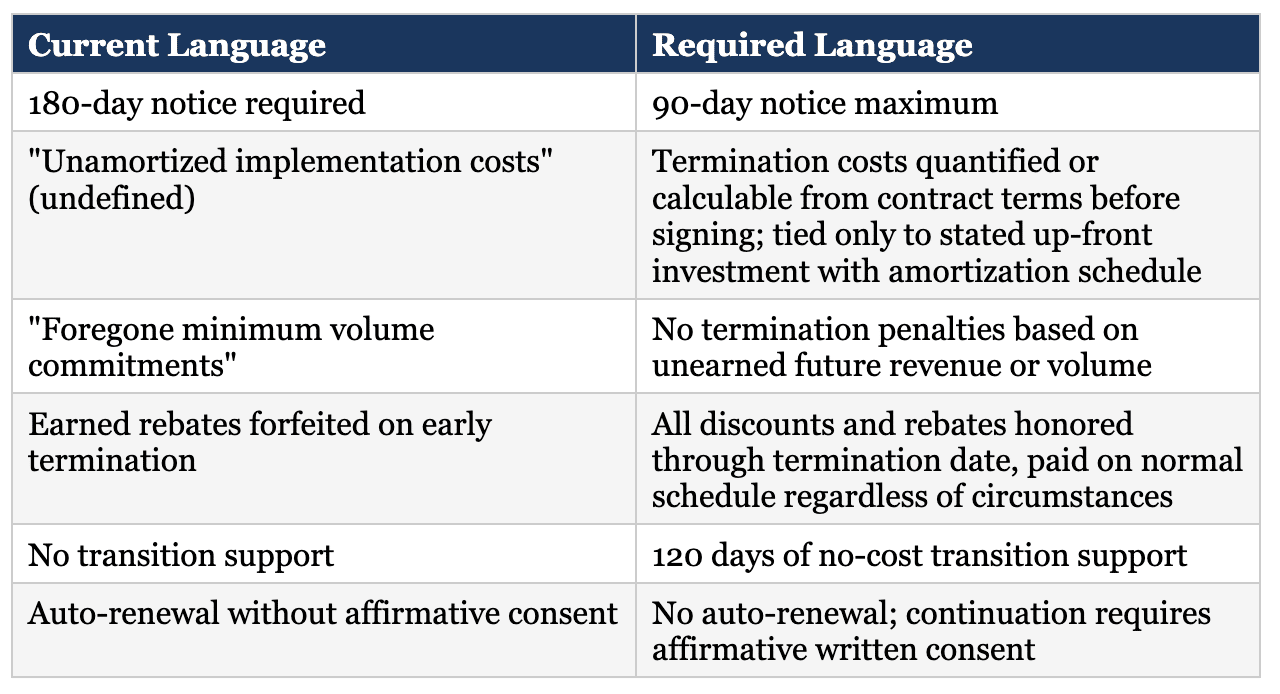
“Either party may terminate this Agreement upon one hundred eighty (180) days prior written notice. Upon early termination, Plan Sponsor shall reimburse PBM for unamortized implementation costs and foregone minimum volume commitments.”
What it means:
Six months notice plus financial penalties for leaving. One contract found termination penalties exceeding $800,000 for a mid-sized employer. The “foregone minimum volume” clause meant the employer owed the PBM for prescriptions its employees never filled. The contract was designed to make staying less expensive than leaving, regardless of whether the PBM was serving the plan’s interests.
What fiduciary-grade language requires:
Current vs. Model Contract Language – Termination Rights
The Standard Exists
These three provisions, audit rights, carve-out rights, and termination right, define whether a contract permits fiduciary oversight or structurally prevents it. The language above isn’t theoretical. It exists in contracts being signed today. Some PBMs offer it as standard. Others will negotiate to it when employers know to ask.
The question isn’t whether fiduciary-grade language is available. It’s whether you’ll accept less.
What to Do First Thing Monday
1. Pull your contract and locate all three provision sections: audit rights, exclusivity/carve-out, and termination.
2. Compare your language to the tables above. How many provisions match the “Current Language” column? How many match “Required Language”?
3. Share this issue with your benefits attorney and consultant. Ask them which provisions can be renegotiated at renewal and which require a new RFP.
4. Submit your contract for scoring. Email support@nautilushealth.org. See how your provisions compare to the database.
In Closing
Over the past month, we’ve shown what contract data reveals when you look at thirty agreements instead of one:
Audit rights: 0 out of 30 pass.
Carve-out rights: 86% Red Flag.
Termination rights: 52% fail the disclosed-and-reasonable standard.
But we’ve also shown that better exists. The model language is here. The benchmark exists. Some PBMs already offer these terms as standard.
The only remaining question is whether you’ll use it.
Here’s to clearer thinking, stronger plans, and better outcomes for the people who rely on us.
All the best,
P.S. Next week: Two more provisions that underpin everything else: pass-through pricing and rebate definitions. The language that determines whether your cost savings are real or reclassified.
Subscribe & Share
🔗 Subscribe: Was this newsletter forwarded to you? Signup to receive The Health Plan Compliance Advantage every Monday.
📤 Share: Know someone negotiating a PBM contract? Forward this issue. The three attorney questions alone could change the conversation.
💸 SPECIAL OFFER: Newsletter subscribers receive 10% off any Validation Institute service. Use code FIDUCIARY10 at checkout.
────────────────────────────────────────
Don’t be a bystander. Change the status quo and reap the benefits of The Health Plan Compliance Advantage. Schedule an introductory call with us.